Structural repairs on a finished building are an absolute nightmare. Fixing a settling foundation or underpinning load-bearing walls costs dramatically more than doing the structure right the first time. Yet, on building sites every day, simple quality control measures are skipped in the rush to cast concrete.
Here are 5 critical structural errors every project manager and site owner must enforce prevention against.
STRUCTURAL FAILURE RISK CHECKLIST
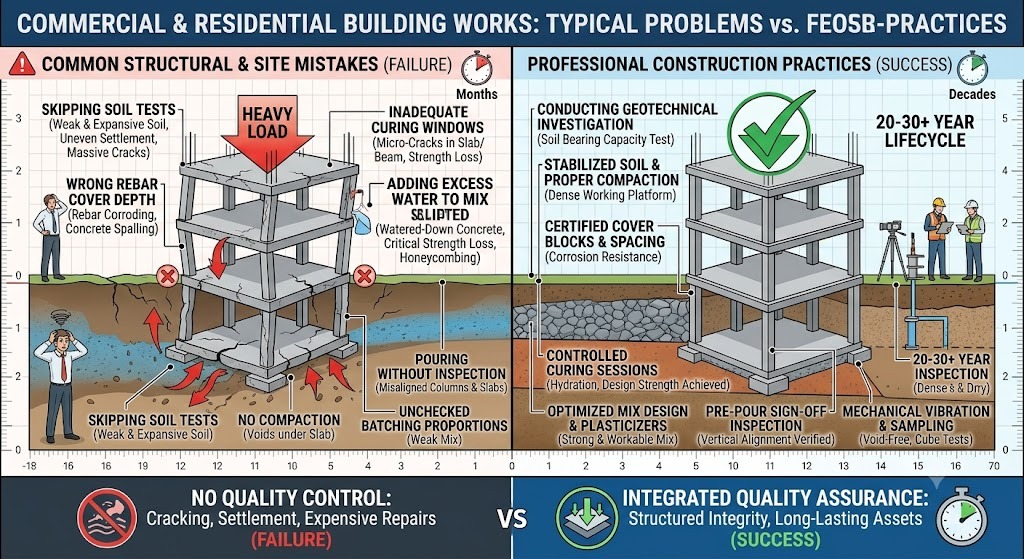
1. Skipping Soil Tests
2. Wrong Rebar Cover Depth
3. Inadequate Curing Windows
4. Adding Excess Water to Mix
5. Pouring Without Inspection
6. Unchecked Batching Proportions
1. Skipping Soil Bearing Capability Tests
Different soils require fundamentally different foundation types. Building a standard strip foundation on expansive clay or weak fill without a soil test (geotechnical investigation) leads directly to uneven settlement, diagonal wall cracks, and structural shear failure. A simple borehole test saves millions in future underpinning costs.
2. Missing Concrete Cover Blocks
Steel reinforcement bars (rebar) must never touch the wooden formwork or earth floor during a pour. Without concrete cover blocks (typically 25mm to 50mm of concrete spacers holding the rebar off the edges), oxygen and moisture will seep in, rusting the steel inside the concrete. As steel rusts, it expands, causing the concrete to spall and crack from the inside out.
3. Adding Extra Water to Concrete for "Easy Pouring"
Site workers often want to pour extra water into ready-mix or site-batched concrete to make it wet and easy to spread. This destroys concrete strength. Excessive water creates microscopic voids as it evaporates, drastically lowering the concrete's ultimate compressive strength (N/mm²). If more workability is needed, use plasticizer additives—never free water.
4. Stripping Formwork Too Early
Concrete does not "dry"; it cures through a chemical reaction (hydration). Stripping soffit formwork from beams and slabs before the concrete reaches its design strength introduces structural deflection and micro-cracks that weaken the floor slab forever.
5. Casting Columns Without Proper Vibration
Pouring concrete into tall column formwork without using a mechanical poker vibrator leaves air pockets and "honeycombing" at the base. Honeycombed columns cannot carry their designed vertical loads and require tedious, expensive pressure-grouting repairs.
The Bottom Line
Great buildings aren't just about beautiful architectural finishes; they are defined by rigid, uncompromising quality control on structural casting days.


 ROAD INFRASTRUCTURE